
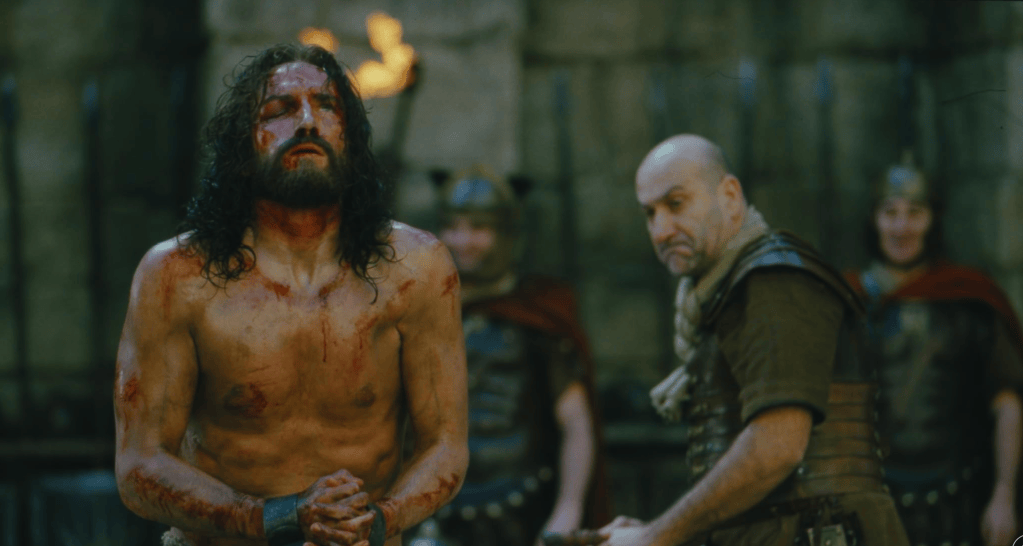
The Passion of the Christ (2004) http://www.imbd.com
Not even a day goes by without me learning something new about God. The more I know Him, the less I seem to know. The more I discover, the more I realize a lifetime will never be enough for me to grasp who He actually is.
How foolish of me to think that I could ever figure Him out.
I have been following Christ for the past twenty-five years, thirteen of them in the Protestant non-denominational world. However, just a couple of years ago, the Lord began to lead me into the fullness of the Christian faith: the Holy Orthodox Church.
I’m going to be honest: coming into the Orthodox faith hasn’t been easy. I have probably gone throught all stages of grief in the past two years. Orthodoxy forced me to die to myself but, most importantly, to dismantle the idea of a Protestant God that I had believed in for a very long time. Coming to the Holy Orthodox faith felt like coming to the end of myself. My entire belief system came crashing down. The Lord began undoing all the doctrinal errors I had been absorbing for years.
He began to renew my mind, help me unlearn and relearn who He actually is. At times it felt like I was learning a completely different religion, as if I had been bamboozled this entire time. I was promised a Disney fairy tale every Sunday, but my reality more closely resembled the life of an exile from the pages of Solzhenitsyn’s Gulag Archipelago.
Nothing made sense.
I had spent my entire life trying to be a “good” Christian — not perfect, obviously, but sincere in my faith and deeds and certainly “better” than most of the people around me.
I was the prideful, hard-hearted older son who stayed with the father in the story of the prodigal son. I’ve always resonated with Him the most. I used to think the prodigal son was an irresponsible idiot who didn’t deserve the father’s mercy, let alone the new jewelry and designer shoes. If it were up to me, I would have made him suffer more and work really hard to earn access back to the father’s riches.
But thank God I’m not God…
I used to think that my version of being “pious” would earn me the right standing with God. After all, it did with my earthly father. So what was wrong with the heavenly Father? Why was He making me suffer? I had watched Him bless people who had hated His guts their entire lives, get blessed five minutes after they gave their lives to Him; people who, in my opinion, didn’t deserve His unmerited grace and mercy.
This went on for years…And resentment started creeping into my soul.
Every time I set my expectations high, everything would come crashing down. Every time I thought I had finally gotten my breakthrough, things would fall apart. Every time I thought I came very close to entering the Promised Land, I was sent back to Egypt.
I got up, but life kept knocking me down.
I didn’t give up. I kept moving forward. Sadly, the church, instead of helping me manage my pride, kept feeding my delusions, harping on the same prosperity gospel message: if you have faith of a mustard seed, anything is possible because God wants to bless you. If you sow a seed to a so-and-so preacher’s ministry, God will multiply it because God wants to prosper you.
Pray big, bold prayers! Strive, ask, knock, keep running! Don’t stop!
It got so ridiculous, to the point that every freaking year, the prophetic words for the year got more irrational, intense, and outright insane. I will never forget the “Vision 2020 Word” that every non-denominational celebrity preacher promised us by the end of 2019. 2020 was supposed to be the year of immense blessing and prosperity, and then COVID hit, and not a single one of those kooky preachers was anywhere to be found to make sense of it all.
Time went on, and nothing changed… The prophetic words got more delusional. Life got harder and more disappointing.
The closer I got to God, the more all hell broke loose in my life. The more I followed His command, the more pushback I received. The more I served Him and His people, the more hurt and betrayal I experienced. And not one spiritual leader reminded me that this was the true meaning of following Christ.
The discontent, the hurt, the betrayal, the pain are all the price that we ought to pay. How could I forget that a bloody crucifix is literally a symbol of my religion? What else was I expecting? Who fed me the lies of prosperity…?
And this is where I had to come to the end of myself, yet again for the millionth time, spending hours, days, weeks, and years on my knees, wrestling with the Almighty.
“I won’t let you go until you bless me. Following You has felt a whole lot like abuse, but I know you are not an abuser. I know you are not.”
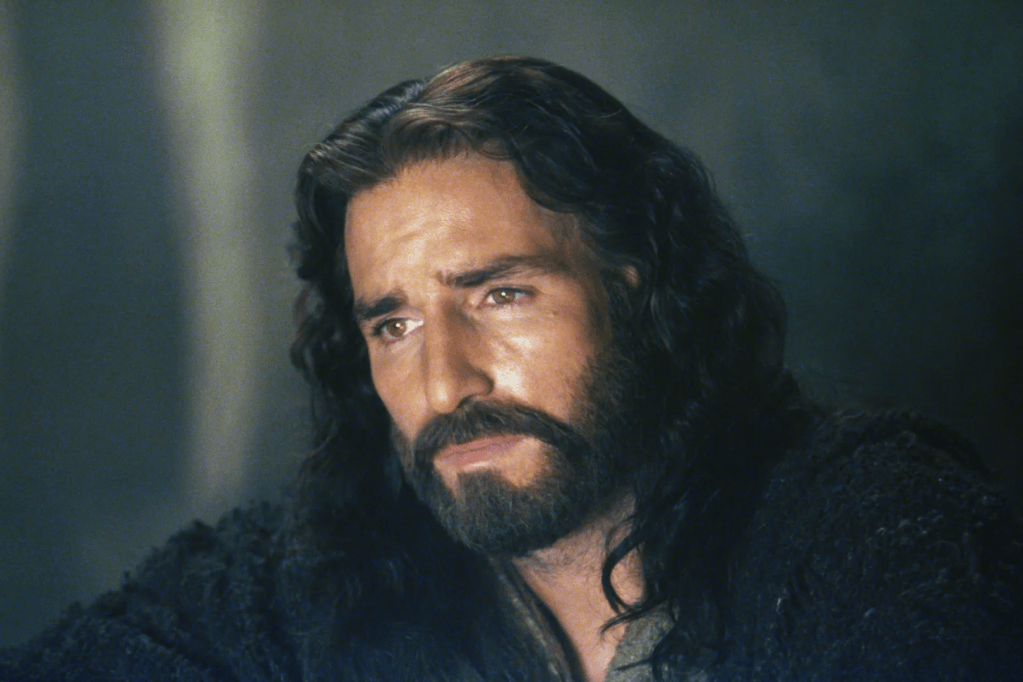
The Passion of the Christ (2004) http://www.rollingstone.com
Looking back, I see how much grace God showed me throughout all of those years. He didn’t force me into the Holy Orthodoxy church because He knew how complicated my past was with the Russian Orthodox Church (or just Russians in general). Jesus was patient and gentle with me all of these years. He let me walk through different traditions, allowing me to taste their fruits so that, when I finally encountered the fullness of the truth (the meat), I could recognize it, embrace it, and devour it.
That journey hasn’t been easy. It began, very unexpectedly, when my entire world turned upside down once I left Islam and embraced Jesus as my Lord and Saviour.
Christ said, “Follow me,” and I obeyed, crossing the ocean to a foreign land, the land where Protestantism has flourished for hundreds of years, and where I had been blessed and honored to see the face of my Beloved.
During this process of purification, one of the hardest things I had to unlearn was the idea that my relationship with God is transactional. Looking back, I realized this belief did not come from God.
It began much earlier.
Making a Deal with God
I grew up with a father who expressed love by giving me things. Not going to lie, I was spoiled rotten as a child. The latest toy? I had it. The latest trendy outfit? I wore it. The latest phone? Purchased. My daddy made sure that I never felt like I couldn’t have something. He came from nothing, and giving me material things was his life’s number one priority, which, in the process, healed my father’s inner child. I could ask for anything, and it was given to me. In return, I had to be the “perfect daughter” — a high achiever, obedient, smart, loyal, and most importantly grateful.
Things didn’t change much even when I became an adult. Whenever I was upset, he would tell me, “You look like you are in a bad mood. I’m going to wire you some money.” And he did — all the time, and it worked. My mood did get better. My traditional muslim father didn’t know how to deal with my emotional roller coasters because in Muslim households, feelings are not often discussed or validated. Men are raised to be strong heads of the household. They are not allowed to show even the slightest sign of weakness. They are taught to suppress their emotions from a very early age, and therefore they have no clue how to deal with the fluctuating mood swings of a female.
Later, things began to change because my father went throught major financial difficulties that impacted his health. He passed away several years ago, and I still haven’t learned how to live without him.
From a very early age, I learned that emotional needs or love could be met through material possessions — a simple wire transfer often sufficed.
Later, when I began to go to Protestant churches, that understanding of conditional love was reinforced by a theology that made God feel strangely similar to my earthly father. I heard, “Give and you shall receive; have enough faith, and God will prosper you,” and “God blesses those who bless others” (that one is not even in the Bible).
Without realizing it, I had taken the wounds of my childhood and projected them onto my relationship with God. I began to measure His love by what He gave me. When He blessed me, I felt loved; when he didn’t, I felt abandoned. I subconsciously created this unhealthy dynamic between Him and me. I made the Father in the image of my earthly father.
And the church didn’t stop me; it affirmed it.
Oftentimes, we mistakenly think that God the Father is a heavenly Santa Claus, waiting to bless or punish us based on how well we behave. We think that if we are good enough, we will remain on His good side and nothing bad will ever happen to us. Sounds silly, but you would be surprised how many Christians actually believe this.
It’s because in the non-denominational world, you are not taught how to suffer. You are not warned that you can lose your life for the sake of the Gospel. You read about it in the Scripture, but Sundays at church often feel like a trip to La-La Land.
And when life happens, and trust me, it will happen, you are left unequipped, unsupported, and totally unprepared to deal with all the difficulties that come with being a true follower of Christ. Relationships will feel shallow, your finances will be depleted because no one will ever teach you about financial stewardship (even though the Bible is full of it), and your mental health will be a mess. And God forbids you to have any ambitions apart from desperately trying to tie a knot with a church loser. You will constantly be made to feel guilty for wanting to dream big because that is “too worldly.”
Because you are taught that God is a judge keeping score of every choice you make. It is only a matter of time before you begin to see Him as a tyrant who is extremely confusing. He wants to give you riches but keeps you broke; He wants you to get married but keeps you single; He wants you to be healthy, but you keep ending up in an emergency room; He wants to bless you with children but keeps you barren.
Christian Burnout
When I gave my life to Christ and moved to the West, I took my salvation very seriously. The idea of submission that had been drilled into me throught my Muslim upbringing followed me into my Christianity. I was now on a mission to labor for Christ to earn His love.
In my early twenties, Tim Keller’s teaching on personal vocation deeply impacted me. Keller moved to New York City in the 1980s to plant Redeemer Presbyterian Church to reach ambitious New Yorkers whose identities often revolved around their careers. He was speaking to a very specific audience because his message resonated with them.
But for someone like me, given my background, some of those teachings landed differently.
When Tim Keller warned against making your career an idol, I heard something else entirely: that anything outside the Christian workspace was somehow less godly, even though he never actually said that.
I began to believe that if I attended a Christian school, worked for ministries or Christian nonprofits, and built my career around the church, I was doing something more “spiritual.” For years, I thought that if you were a Christian, it was your duty to work for a ministry.
That is what “good Christians” do.
For years I suppressed my own ambition because I felt ashamed of having it. I am an immigrant who had crossed an ocean to move to one of the wealthiest countries in the world. A traditionally Muslim woman who had grown up sheltered and ingrained with deeply traditional Muslim expectations of womanhood was suddenly exposed to a much bigger world. And that world was brutal, competitive, and lonely.
Being an immigrant is hard enough, but being an immigrant woman of color came with another layer of difficulty.
Then I added the church’s expectations on top of it all. Some of the teaching I internalized in the church only made that burden heavier. Instead of encouraging women to recognize and develop their gifts, talents, intelligence, and ambitions, I often heard an idealized version of the Proverbs 31 woman presented as someone whose main role was to be a submissive, stay-at-home wife who takes care of her children.
But that is NOT who the Proverbs 31 woman actually is!
The woman of Proverbs 31 is a businesswoman — call her a girlboss (I don’t care), an entrepreneur, a financially savvy gal respected by her community and trusted by her family. She owns properties, invests in the stock market, runs multiple businesses, and is admired, supported, and loved by her husband and children. She is not a passive woman waiting for permission to use her talents and gifts and be picked by a man.
Yet somehow, we never preached the real Proverbs 31 woman and started preaching a culturally constructed, sanitized, “republican” version of her that never existed.
So, I absorbed all of this for years.
I was already struggling as an immigrant, taking whatever jobs I could find, often agreeing to work for poverty wages because I had no choice. I justified it by saying, “I’m doing this for the Lord,” but I slowly began to resent Him.
On top of that, I volunteered until I was blue in the face.
I overworked for little pay, and I volunteered whenever and wherever I was needed. I said yes again and again and again.
I ran, and I ran until I couldn’t run anymore.
Eventually, I was completely depleted — emotionally, spiritually, financially. I spent years serving and pouring into other people while rarely feeling poured into myself. I know the response I might get from someone reading all of this: you aren’t supposed to give to receive. Now, that might be true to an extent, but there is a big difference between self-sacrifice and continual depletion. If people constantly give their time, money, and labor to the church without any support, that is called abuse.
God is not an abuser!
People are, and most of the time, Christians are among the most abusive human beings you will ever meet.
There were times I didn’t need someone to acknowledge my effort — I just needed someone to notice and, for once, ask how I was doing. Me, as an individual, a woman, an immigrant, a persecuted Christian from a Muslim country — one of “the least of these.”
For years I heard some pastors talk about people like me. I heard them raise money for people like me. But when the Lord actually brought a persecuted Christian into the church, the church didn’t know what to do with her. It’s always easier to romanticise persecution from a distance than to meet it up close — the same way some people learn to numb their own pain instead of looking inward to face it. The church, in my expereince, often does the same thing when it comes to actually acting like Christ.
The avoidance often left me heartbroken. For years, I could stand in a sea of believers and still feel utterly alone. No matter how hard I tried to build community, it eventually fell apart because people were too busy chasing their own lives, and community building felt like one more exhausting task on the list.
It felt like a one-sided relationship, and no relationship can remain healthy or sustainable that way.
And something in me began to break.
Strong People Get Tired Too
Over the years, I have come to understand that people rarely have sympathy for those who look “strong.” And I have felt that especially as a woman in the church who was held to a standard of quiet endurance, carrying the weight without complaint, and rarely asked if she actually needed help. I learned to smile, to function, to keep going, until the day I finally admitted I was struggling, and no one knew what to do with it, because I didn’t look like I was suffering.
My exhaustion wasn’t only physical; it was years of burnout that turned into a spiritual crisis. It was a combination of bad church teaching, poor leadership, misguided priorities, and no accountability.
And none of it had to do with God.
The God Who Doesn’t Exist
For years I was taught a narrative that God wanted to bless me with health, wealth, and prosperity. For years, none of that came my way, and I genuinely thought something was wrong with me and God genuinely did not like me. I knew He loved me, but didn’t really like me. I felt like a kid standing in a long line at a candy store, waiting for my turn to be blessed.
I had created this idea of a God who would reward me if I did one more good deed for Him. I thought if I gave, He should give back. If I obeyed, He must reward me. And when He didn’t, I felt betrayed and abandoned. At times it almost felt like I was in an abusive relationship, not because God was abusing me, but because I had been taught to understand His love through that exact framework; God was teasing me and feeding me empty promises. I fulfilled my side of the bargain, but He was taking His sweet time with His.
I felt gaslit by God.
That is not how the Kingdom of God operates. We cannot worship God and treat Him as a vending machine whose love is measured by our bank accounts. Material wealth was never and will never be an indicator of holiness, and suffering will never be proof of abandonment. Sometimes God shows us love by blessing us financially; other times, His love looks like immense suffering. Surgeries hurt, but they are necessary if you want to receive healing.
There are seasons of life when God tells us to detach ourselves from earthly possessions so we can see spiritual matters more clearly. During this season, you will be forced to ask God: Do I love You for who You are, or only for what You can give me?
When you sit with this question long enough and answer it honestly, not pretending to be a “good and moral” Christian, you will discover the current state of your nous (the eyes of the soul). You will discover that the Gospel never promised us material prosperity apart from holiness — Christ calls us to deny ourselves and take up our cross daily, no matter what is happening in our lives. God knows that attachment to material things often turns into an obstacle that prevents us from seeing the mysteries of God.
This is why the monastic tradition of poverty and chastity has historically been one of the main paths that lead to theosis. Poverty and chastity loosen our attachment to worldly possessions and desires, creating space for deeper communion with God.
If you want to see the face of God, you must strip away anything that obscures your vision.
One day at a time
I spent years asking God why He wouldn’t give me what I wanted on my own timeline. After all, my earthly father did when he was alive. The Bible taught me that our Heavenly Father loved me more than my earthly father. But it sure didn’t feel like it. The Word says, “Ask, and you shall receive” — that was the extent of the teaching, but that is not the fullness of the Gospel. God is a Father — a perfect Father, infinite in His wisdom and eternal in His love, who knows exactly when and how to give us what we need.
Not today, not a year from now, not next week, but today.
One day at a time. “Give us this day our daily bread.” Matthew 6:34
And while I was busy chasing His approval, waiting for a physical reward, and running around doing everything under the sun, He met me in the middle of the chaos. Instead of giving me what I thought I was waiting for, He gave me something infinitely more precious — His presence.
I was looking for earthly treasure, while this entire time He was giving me something priceless I could never earn or buy — Himself.
He offered me treasures in heaven, while I kept staring at pennies in the dirt. He gave me pearls, and I wanted to throw them to the swine.
And only when I began to let go of the idea that God owes me a particular kind of life — the freer I became. I no longer measured His love by what I received, and I no longer read someone else’s prosperity as proof that God favored them more than me.
My Heavenly Father loves more than I could ever imagine or grasp. I am His little girl, and He shows me His love and presence so much that at times I have to ask Him to stop because that cosmic affection might actually kill me.
My Heavenly Father is not an abuser.
For years, I overlooked the fact that I was the older son in the house of the Lord. I had access to the Father and everything He owned any time I wanted. I also realized that the older son never had to experience the excruciating pain and darkness of being separated from the Father as the younger son did. I’ve gotten so used to the blessing of seeing His face whenever I wanted that I have completely overlooked how rare that actually is. Most Christians I have met never even had one supernatural expereince in their entire lives.
It took me years to grasp the privileged spiritual life I have lived. The Father has given me access to Himself and shown me things that an average Christian in the world waits a lifetime to experience.
I’ve been fortunate to see Jesus in an open vision. I have heard His voice multiple times, and I continue to hear it in my dreams. The Father has shared His secrets with me. The Father has taken me to realms only a few have seen. I have seen angels. I have seen the demonic realm. I have seen glimpses of heaven and hell. I have felt the Father’s burdened heart for humanity. And at times I have been consumed by the almost psychotic love that is the consuming fire of God.
My Heavenly Father has given me Himself.
That is why I no longer measure the depth of His love by the balance in my bank accounts, the size of my house, the car I drive, the clothes I wear, the countries I visit, the success of my career, or the number of social media followers I have.
My worth is only measured by the Cross. My Abba loves me, and He alone is enough.

 Fariza
Leave a comment