

There comes a point in every Christian’s life when God begins to call them out of Egypt.
If you have spent enough time in the church, you have almost certainly heard this language used before. The Exodus story in the Bible has become one of the most familiar and most frequently used metaphors for describing the Christian life.
In this context, Egypt represents our bondage to sin — the old life we are called to leave behind. Pharaoh represents Satan, who keeps us in that bondage, while the wilderness represents the reality of what it truly takes to follow God after saying yes to Him. That journey is often excruciatingly painful, even to the point where it feels like death.
During that season, you may find yourself crying out to God the same way Israel did, asking, “Did You bring me out here to kill me?”
But that is not where the story ends.
There is also the promise of the Promised Land. After all, the story in the book of Exodus is ultimately about the Promised Land, not the pain we so often fixate on. The long-anticipated destination is the triumphant breakthrough awaiting on the other side of the Red Sea.
As Christians, we are constantly told that our breakthrough is just around the corner. Yet when we look closely at how that breakthrough is often described, it begins to sound suspiciously like a shopping list rather than a spiritual inheritance.
This is where the disconnect begins.
This is where this type of teaching leaves millions of Christians disappointed, heartbroken, and ultimately, on the path toward deconstruction.
We have been taught to see God’s promise as something material rather than a spiritual inheritance that leads to eternal life. We have placed so much emphasis on material blessings that spiritual ones have no value in our eyes. Instead of learning to renew our minds and seek the things of God, we are often taught to follow Christ because He multiplied the loaves and fishes.
Man shall not live by bread alone.
If that is true, why are we so often taught to believe that the bread is the Gospel?
The Promised Land, in the way most of us have been taught to imagine it, tends to arrive in the form of material blessing: a new job, a new house, a location, a spouse, a child, a car, an unexpected check in the mail.
The list goes on and on…
And that, I would argue, is precisely because we have inherited this story through a distinctly Western lens, influenced by American consumer culture and a prosperity-driven Protestant theology that has reshaped our view of what “blessing” means.
It is a story we know so well that we rarely stop to ask whether we have understood what God was actually trying to teach us throught it.
For most of us, leaving Egypt means leaving behind our old ways of life. We assume that once we overcome our sins and walk away from unhealthy relationships and abandon destructive habits, God will reward us with material blessings. But that doesn’t make any sense because why would God reward your spiritual transformation with material possessions? Those two things don’t go together.
One is eternal, and the other is temporal.
Yet somehow we have convinced ourselves that this is what we deserve if we choose to live a sanctified life. And when those material blessings never arrive, we conclude that all of the suffering and spiritual growth was meaningless, leaving many Christians frustrated and disillusioned.
Who told us that this is how the Kingdom of God operates?
The early church did not live that way. The Church Fathers did not live that way. The saints certainly did not live that way. Most of them were martyred and died horrific deaths.
This is the true cost of discipleship — not a check in the mail or a mansion on a hill.
We have completely missed the mark and have abandoned the true Gospel. We often never fully leave Egypt; instead, we repackage it, rename it, and convince ourselves that it is the truth.
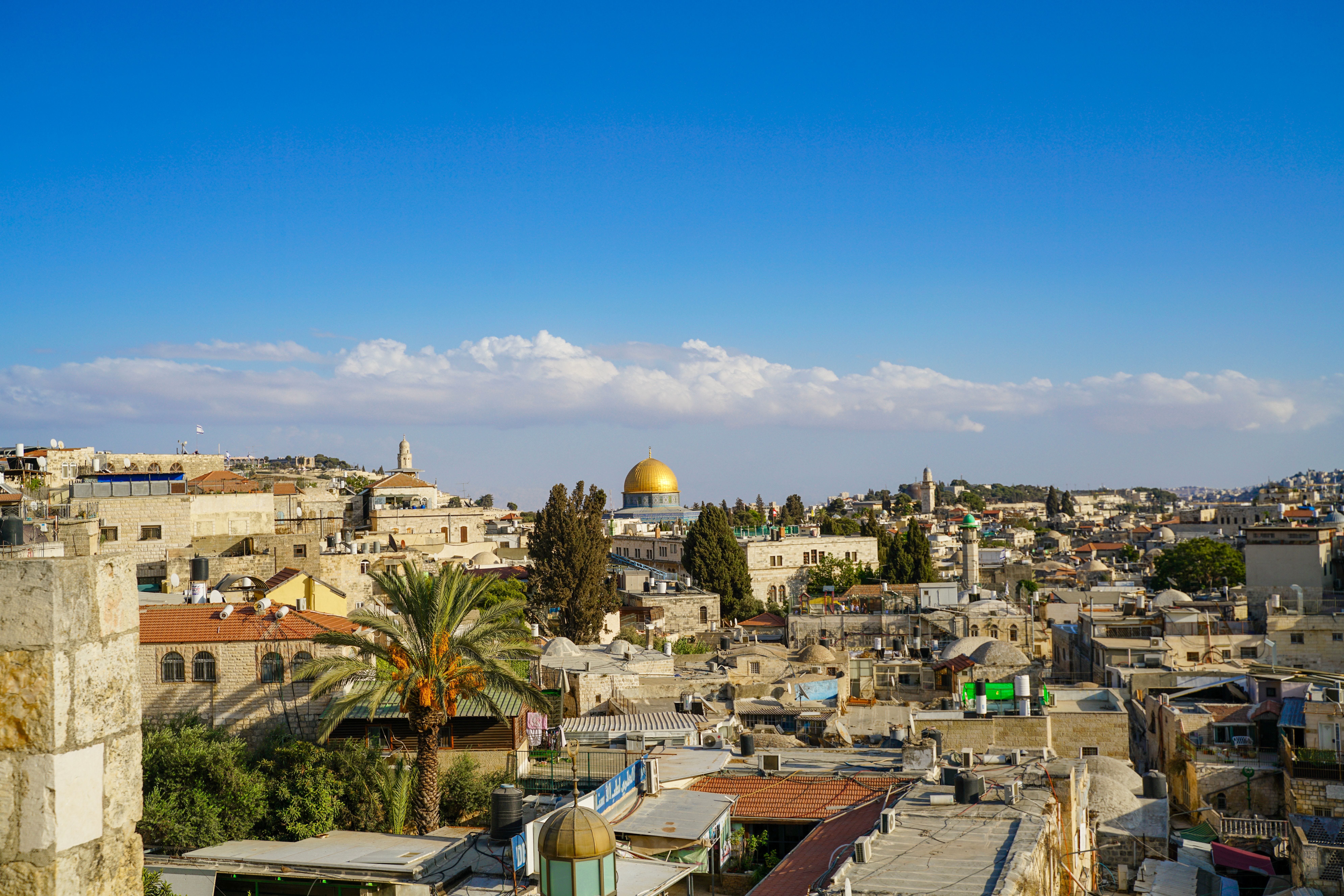
The Israelites did not spend four hundred years in Egypt because one day they would live somewhere else. If God’s ultimate goal had been relocation, the journey from Egypt to Canaan could have taken only a matter of weeks. Instead, He led His people into the wilderness where they would spend forty years learning something far more difficult than how to travel from one place to another.
God wasn’t changing Israel’s location; He was transforming Israel’s heart.
That is an important distinction because it changes the way we read the entire story. We often imagine that once Israel entered the land flowing with milk and honey, the story reached its happy ending. Yet anyone who continues reading the Old Testament quickly realizes that entering Canaan did not solve Israel’s main issue. They still rebelled, chased idols, and continued to harden their hearts against YHWH. Eventually, the very land they had longed for became the place from which they were exiled because they repeatedly broke the covenant the Lord had made with them. Perhaps that should force us to reconsider what the Promised Land was always meant to represent. The story in the book of Exodus was never primarily about escaping Egypt.
It was about becoming the kind of people who could dwell in the presence of God.
The tragedy of Israel was never that they occasionally stumbled. The tragedy was that although they had physically left Egypt, Egypt never fully left them. Their bodies were free, but their hearts still longed for the security of slavery. Every difficulty made them question God’s goodness. Every trial tempted them to return to the life He had delivered them from.
I sometimes wonder if the same is true for us.
We often assume that the Christian life is about exchanging one set of behaviours for another, but Christ came to do something infinitely deeper than behaviour modification. He did not die merely to make bad people behave better. He came to restore human nature itself. He came to heal what had been fractured by sin, to illuminate what had been darkened, and to make us, by grace, what we could never become on our own.
This is why so many people give up while running the race of faith. Spiritual transformation cannot be measured or quantified. You cannot touch it, smell it, taste it, or see it with your physical eyes. We live in a world that values only what can be possessed, counted, and displayed, so when God begins to change our hearts instead of our circumstances, it often feels as though nothing is happening at all.
There is a popular Russian expression people often say after someone thanks them for a favor: «Спасибо в карман не положишь» (Spasibo v karman ne polozhish), which literally means, “You cannot put a “thank you” in your pocket. It is usually said jokingly, but it reveals something profoundly true about the human heart. Gratitude is intangible. You cannot spend it, wear it, or take it to the bank.
In many ways, this is how we have come to view the Christian life. We struggle to value what cannot be held in our hands. We want our faith to produce something tangible — more money, a better career, a bigger house, or a more comfortable life, because those are things we can measure. But the Kingdom of God is not built on what can be accumulated. Its greatest treasures are invisible: holiness, humility, peace, communion with God, and a heart transformed into the likeness of Christ.
And it is transformed throught hunger, loneliness, sickness, abandonment, and loss — the very things we have been taught to avoid rather than receive as blessings.

That is why I no longer think the Promised Land is best understood as a place where life finally works out. Scripture itself refuses to let us draw that conclusion. Rather, the Promised Land points beyond itself to the One in whom every promise of God finds its fulfillment.
The inheritance Israel received was never meant to terminate on some lines in the dirt.
The Temple, the sacrifice, the priesthood, and nearly every other image in the Old Testament, ultimately find their meaning in Christ. He is the true inheritance.
Jesus is the Promised Land.
Christ is the rest for which the land could only prepare God’s people and the destination toward which the entire Exodus has always been moving.
Leaving Egypt is no longer about abandoning our broken past. It is about allowing Christ to strip away everything that prevents us from seeing Him as He truly is. Layer by layer, He exposes our pride, our self-reliance, our false identities, our misplaced loves, and every illusion we have mistaken for truth. The fathers call this the purification of the nous, the healing of the eye of the soul. It is through this slow and often painful work that we begin to perceive reality as God intended it since Eden.
Perhaps that is why theosis feels like coming to the end of yourself — the act of being emptied.
Leaving Egypt feels so much like dying.
In many ways, it is.
 Fariza
Leave a comment