I recently had the opportunity to attend a powerful prayer gathering hosted by Church of the City through their Pray NYC ministry. Christians from all over New York City came together to pray and worship. We lifted prayers for unity within the Church, godly leadership, the current political climate, immigration issues, the rising generation, the poor and the hungry, and countless other pressing needs. We then broke into groups of three to pray through each prayer prompt.
After the evening concluded, I got into a conversation with a woman from my prayer group. As expected, she was curious about my conversion story from Islam to Christianity after hearing me passionately pray for the Muslim community in the city. She then began to share a story about her missionary friends in Afghanistan and their incredibly difficult journey of evangelizing in one of the most dangerous places in the world to be a Christian. Despite their dedicated efforts to share the good news with the Afghan people for over two decades, they were only able to lead two people to Christ.
She also shared a story of one young Afghan man, convinced of the truth of Christianity, who couldn’t bring himself to leave Islam due to the severe consequences he would face. He said, “I know Christ is the way, but I cannot leave Islam—my life would be over.”
For many Muslims, apostasy is not simply a matter of changing religions; it involves leaving behind their entire identity—family, culture, and tradition. Islam teaches that being Muslim is not just a belief but an essential part of who you are. According to Islamic teachings, all human beings are born Muslim. Therefore, choosing to leave Islam means rejecting your true identity and cutting ties with all aspects of your social and family life, as they are deeply intertwined with the Islamic faith.
While Christians face persecution in many parts of the world—sometimes from those who don’t even believe in God—the issue rarely makes headlines in Western media. Why? The answer is simple: Jesus Christ.
Why are Christians so often persecuted, especially in places where Christianity isn’t the dominant religion? Let’s explore this further:
Why Are Christians Persecuted?
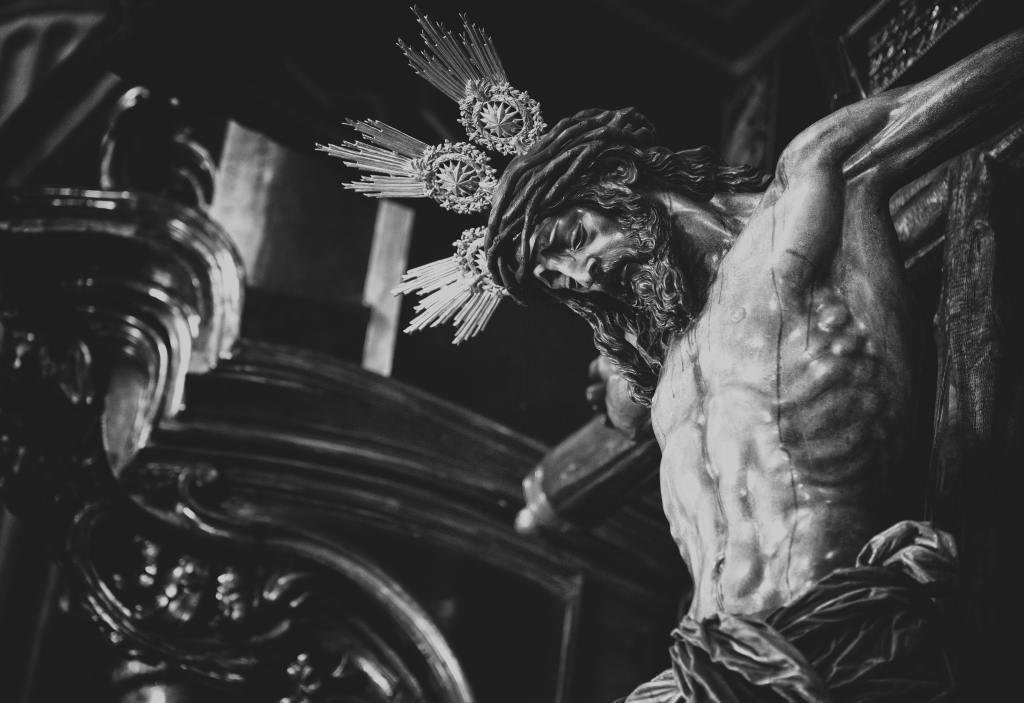
I once had a small, metal crucifix statue that magically appeared on the bookshelf in my living room of my New York City apartment. It was probably a gift given to my friend, with whom I used to live. One day, I took it from the shelf and as I gazed at it, a deep wave of sorrow consumed me. I felt the weight of Jesus’ suffering. The small piece of metal seemed to come alive. Why do Christians hold on to the image of Jesus on the cross, nailed, brutally beaten, bloody, and unconscious? Why do they focus on this during worship services? Why do they wear it around their necks as if it were some kind of accessory? Jesus dying on the cross was one of the most horrific, cruel, and unjust things that could ever happen to a human being. If you think about the crucifix long enough, it will make you sick to your stomach. I felt sick to my stomach.
In that moment, I began to “knowingly know” — an Old Testament concept where God imprinted the truth into the hearts of the Israelites through the performance of rituals. It was meant to lead them to internal transformation. God’s holy way of living was meant to be engraved in their hearts, transforming head knowledge into heart knowledge. The eucharist is what transfers head knowledge of Jesus’s death into heart knowledge.
The symbol of the Christian faith is the crucifix—a brutal, jarring image of Jesus nailed to the cross. The crucifix serves as a reminder of the unimaginable suffering Christ endured for our sake. It calls us to reflect on the reality that, just as He suffered, we too may be called to endure hardship, even facing persecution and death, just as He did.
It’s no surprise that the film The Passion of the Christ, directed by Mel Gibson, received such an overwhelming response when it first hit theaters. Audiences had intense, visceral reactions to the film, as it vividly portrayed the historical suffering of Jesus. His body and face were so brutally disfigured that He was almost unrecognizable. Flesh hung from His body, and blood poured out—it was a haunting image. Yet, what happened in real life was even more horrific than what was shown on screen. Some viewers were so emotionally affected that they had to be hospitalized. In Moldova and Russia, ambulances were reportedly stationed outside the theater to care for those in distress.
Christianity, at its core, is a radical faith. Christianity is radically non-violent. It commands its followers to non-negotiables like loving their enemies, turning the other cheek, and forgiving no matter how challenging it might be. Christians believe in a man who is also God, who came to earth as a helpless baby, lived a humble life, and was crucified and rose from the dead after three days. True Christianity calls for radical love and sacrifice, where Jesus wasn’t a political leader, a warrior, or a king in the traditional sense. He was a suffering servant. That threatens systems of power, both religious and secular. Jesus’s message offends because it calls people to repentance, humility, and surrender.
The Church always has—and always will have—a remnant: the true followers of Christ who will get persecuted. Unfortunately, this is often a small group compared to the vast number of people who claim to be “Christian” in the West. Anyone can claim to be a Christian, but that doesn’t mean they truly are, just like going to a hospital doesn’t make someone a healthcare provider.
As the remnant, we are not surprised by persecution because we are told it is part of the deal throughout the Bible and church history.
Christianity Is Inclusive But Highly Exclusive
Christian around the world are persecuted because our faith while widely inclusive in its invitation—open to every person regardless of background—but highly exclusive in its claim that salvation comes only through Jesus Christ. Christianity is a belief system that is available to all people, regardless of nationality, race, social class, language, tradition, or culture. In Christianity, salvation isn’t something you earn—it’s something you receive by accepting Christ. It is the death and resurrection of Jesus Christ that opens the path to heaven.
However, once you become a believer and receive the Holy Spirit, you are called to actively walk out your salvation. As Philippians 2:12 says: “Therefore, my beloved, as you have always obeyed, so now, not only as in my presence but much more in my absence, work out your own salvation with fear and trembling.”
Christianity does not emphasize the transformation of the external aspects of a human being but rather seeks the inward transformation. Christ is not after mere behavior modification, but true heart transformation—an inward change that eventually shows on the outside. When your mind and soul are healthy, your body and behavior will follow. You come as you are—and God takes it from there. Christ transcends culture, tradition, language, ethnicity, and any other identity you cling to or that has been placed on you. He makes you a new creation—a citizen of heaven, a member of God’s divine family. You join a movement where everything in the New Testament flips the values of this world upside down. It challenges your flesh, your instincts, and your natural desires, which can often be harmful to your physical and spiritual health.
In Christ, you become something entirely new—something that stands in stark contrast to the ways of this world. That’s the tension. That’s the issue. Christianity goes against the patterns of this world. That’s why it’s persecuted. It’s not of this world—it confronts and challenges it.
Christianity is Offensive
Believing that God can take on human form, live as one, die, and then be resurrected is considered blasphemy in both Judaism and Islam. Islam specifically rejects the idea that Jesus is the Son of God who came to earth to take away the sins of the world. In Islamic belief, Jesus (Isa) is considered a prophet, not divine.
The Qur’an explicitly denies any claims of Jesus’s divinity. For example, in Surah Al-Ma’idah (5:75), it states:
“The Messiah, son of Mary, was no more than a messenger; many messengers had come and gone before him. His mother was a woman of truth. They both ate food. See how we make the signs clear to them, yet see how they are deluded from the truth!”
In Surah An-Nisa (4:157-158), it further clarifies:
“And [for] their saying, ‘Indeed, we have killed the Messiah, Jesus, the son of Mary, the messenger of Allah.’ But they did not kill him, nor did they crucify him—but [another] was made to resemble him to them… Rather, Allah raised him to Himself.”
Because of these foundational beliefs, many Muslims have a visceral reaction to hearing what Christians believe. Their sacred texts do not emphasize the centrality of Christ, nor do they affirm the core of the Christian faith: salvation through Christ’s death and resurrection.
Unlike Christians, who are promised eternal life by receiving the Holy Spirit and accepting Christ as Lord and Savior, a Muslim is not guaranteed salvation. The only assurance in Islamic theology is for those who die as martyrs. As stated in Qur’an 3:169:
“Do not think of those who have been killed in the way of Allah as dead. Rather, they are alive with their Lord, receiving provision.”
The Qur’an and Hadith contain numerous verses—some implicit, others explicit—that encourage violence toward non-believers. Interpretation of these passages can vary depending on the branch of Islam a person follows. However, the underlying belief that non-Muslims are kuffar (infidels) is deeply embedded, often subconsciously, in the hearts of Muslims—whether they acknowledge it or not. I know because I was born and raised Muslim.
Christianity also condemns practices such as homosexuality, abortion, adultery, sexual immorality, as well as adherence to other religious belief systems. These beliefs are often seen as offensive to those outside of the faith, and they contribute to the growing challenges and persecution faced by Christians in the world today.
What Can Christians in the West Do to Help Persecuted Christians?
- Pray: Pray for persecuted Christians around the world. Join organizations that focus on prayer for the oppressed.
- Advocate: Speak up for persecuted Christians. Share their stories on social media, participate in vigils, speak, write, and contact your government officials to make a difference.
- Share the Gospel: Educate yourself about Islam and other faiths, and find ways to share the love of Christ with Muslims, Jews, Hindus, and everyone else with love and respect.
- Love: Build relationships with people from different religious groups—not to forcefully convert them, but to love them as Christ loves us. This is a powerful way to counter negative stereotypes and show the true heart of Christianity.
- Support: If you’re able, support organizations that assist persecuted Christians. You can donate, volunteer, or even go on mission trips to help.
The Cost of Standing for Righteousness
Remember, standing up for righteousness comes at a high price. But as Christians, we are called to pay that price with joy, boldness, and deep conviction that we are loved by Jesus. The Bible tells us that God has not given us a spirit of fear, that we are more than conquerors through Jesus Christ, that this world is not our home, and that we are to be courageous—the light and salt of the earth.
We have the Father, the Son, and the Holy Spirit on our side, accompanied by a host of mighty angelic beings fighting alongside us in this spiritual battle. So what are we afraid of? Why do we fear losing this temporary flesh when our true life is eternal?
“If the world hates you, keep in mind that it hated me first. If you belonged to the world, it would love you as its own. As it is, you do not belong to the world, but I have chosen you out of the world. That is why the world hates you. Remember what I told you: ‘A servant is not greater than his master.’ If they persecuted me, they will persecute you also.”
John 15:18-20
 Fariza