
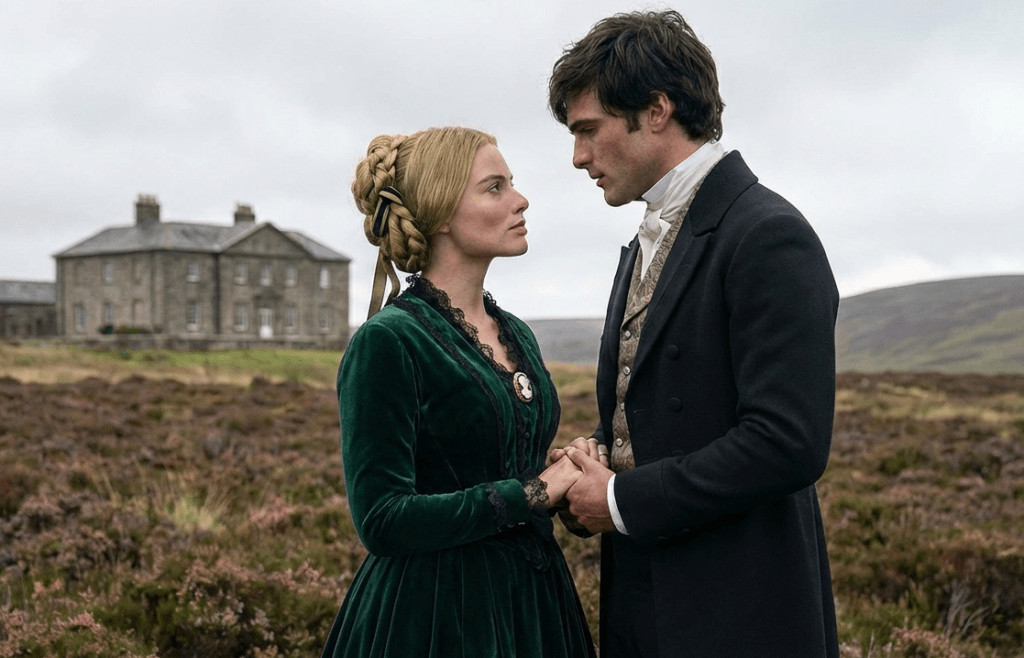
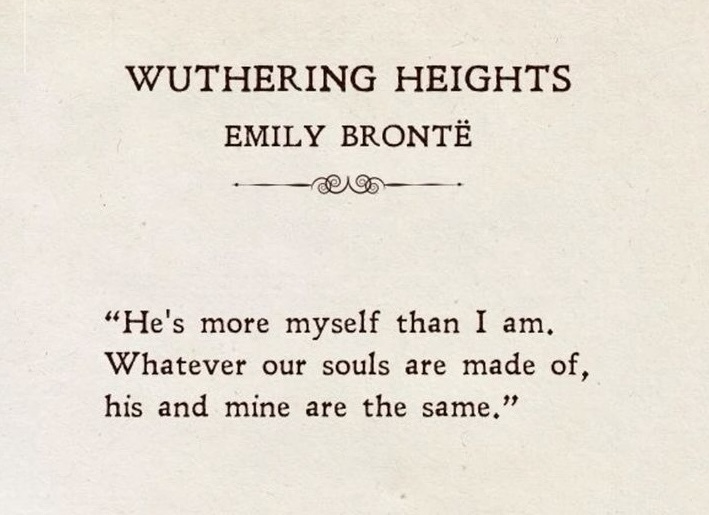
My love for Linton is like the foliage in the woods: time will change it, I’m well aware, as winter changes the trees. My love for Heathcliff resembles the eternal rocks beneath: a source of little visible delight, but necessary. Nelly, I am Healthcliff! He’s always, always in my mind: not as a pleasure, any more than I am always a pleasure to myself, but as my own being.
~ Emily Brontë, Wuthering Heights
I don’t know what’s gotten into me lately, but I’ve entered my classic Hollywood films era. I’ve probably watched one almost every night for the past three weeks. I’ve been so hooked that I accidentally ended up at my local library on a random Thursday evening, attending a screening of the 1939 adaptation of Emily Brontë’s Wuthering Heights.
I didn’t even know public libraries had movie screenings.
It was a pleasant surprise since I had been planning to see the new version starring Margot Robbie and Jacob Elordi in theathers. But after watching the 1938 masterpiece, I lost the desire to see the modern take. Remakes tend to be disappointing, and after reading the reviews, I found out that the new version takes significant liberties with the source material — too much sensuality in true oversexualized Hollywood fashion.
Now, back to the 1939 film.
I really enjoyed the movie! There is something so comforting about watching old films in the Transatlantic accent (thank goodness for subtitles). But beyond the fuzzy feelings I was feeling the entire time, I couldn’t help but psychoanalyze every character in the movie. Cathy, played by the iconic and stunning Merle Oberon, had my attention the entire time.
Every choice she made had me internally screaming, “Girl, no. You don’t need a husband. You need a therapist!”
I could sense the disorganized attachment style from a mile away. The pull and push, the way she longs for true love that consumes her, but shuts down immediately after receiving it. She is a walking contradiction, and she can’t help herself. The impulsivity to run away from her own feelings once they get too real is a classic, textbook trait of people with fearful-avoidant attachment style. Cathy shoots herself in the foot by choosing the “safe” guy over a man she truly loves — a decision that subsequently drags everyone down with her.
If you haven’t seen the film or read the book, here’s a brief synopsis so you know what I’m talking about.
Wuthering Heights is a dark Gothic novel written by Emily Brontë about an obsessive, vengeful, toxic love story set on the West Yorkshire moors in Northern England. The story centers around Heathcliff and Catherine Earnshaw (Cathy). He is a foreign dark-skinned gypsy, possibly of Indian or Arab descent, an orphan brought into the Earnshaw family as a child, and she is the youngest daughter of the Earnshaw family.
Heathcliff and Cathy begin to bond as children, and eventually their friendship turns into a passionate, all-consuming, over-the-top, borderline obsessive love as the years go by.
Cathy’s character is complex, to say the least.
Cathy might be in love with Heathcliff, but she is also in love with luxury, money, and status. Despite having feelings for her childhood crush Heathcliff, Cathy chooses to marry the wealthy Edgar Linton. In Cathy’s messed-up, disorganized fashion, she believes it is beneath her to be with Heathcliff, a poor nobody.
In the real world, I would have supported Cathy one hundred percent — because financial stability should, obviously, come before a neurological glitch, which obsessive love actually is. But for the sake of the movie, I did not support her choice because you can’t play with people’s feelings just because you refuse to get help.
I get it, choosing between love and luxury can be tough. Hollywood has conditioned us to believe that choosing money over love is inherently wrong, but that’s not how real life works, nor is that what healthy love looks like.
Certainly, Cathy and Heathcliff’s love wasn’t wholesome.
They were trauma-bonded, not in love. Cathy lost her dad as a child and grew up with a controlling older brother, Hindley. Heathcliff was an orphan who was bullied by Hindley his entire life, while growing up in a racist society. As children, they were each other’s safe space, which created deep emotional codependency in both of them.
The sad part is that these types of relationships rarely end well. Unresolved attachment wounds don’t just go away; they often resurface as revenge, obsession, and control.
This is exactly what happened to Heathcliff. He became the embodiment of what happens when love turns into an unhealed trauma.
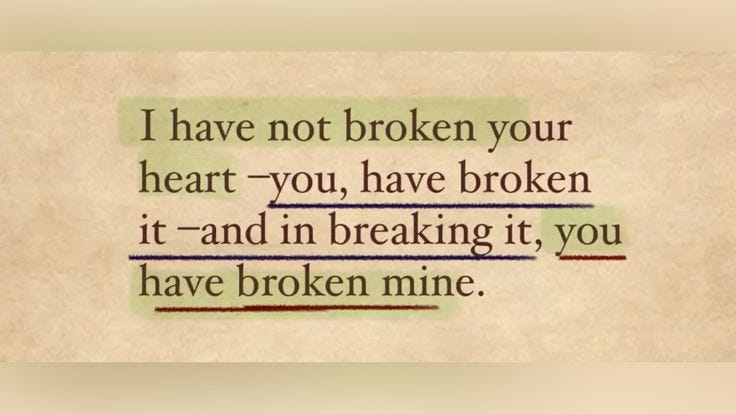
Motivated by hate and revenge, Heathcliff travels to America, becomes wealthy, and returns to England. He acquires Wuthering Heights from Cathy’s brother, who is now an alcoholic and a total mess. To take revenge on Cathy and torment the Lintons, Heathcliff marries Edgar’s sister, Isabella — an absolute delusional sweetheart. She knows her husband is obsessed with Cathy, but she is still convinced that one day he might reciprocate her feelings of devotion and loyalty.
The film ends with Cathy’s premature death, and Heathcliff is left to be haunted by her ghost after having wreaked havoc on the lives of those around him.
The famous line, “Catherine Earnshaw, may you not rest as long as I am living. You said I killed you — haunt me then,” becomes prophetic.
Cathy does end up haunting Heathcliff for the rest of his life. The codependency, the trauma bond, the obsession they called love, follows them even into the afterlife.
The grand finale — a morbid, happily-ever-after in the land of the dead.
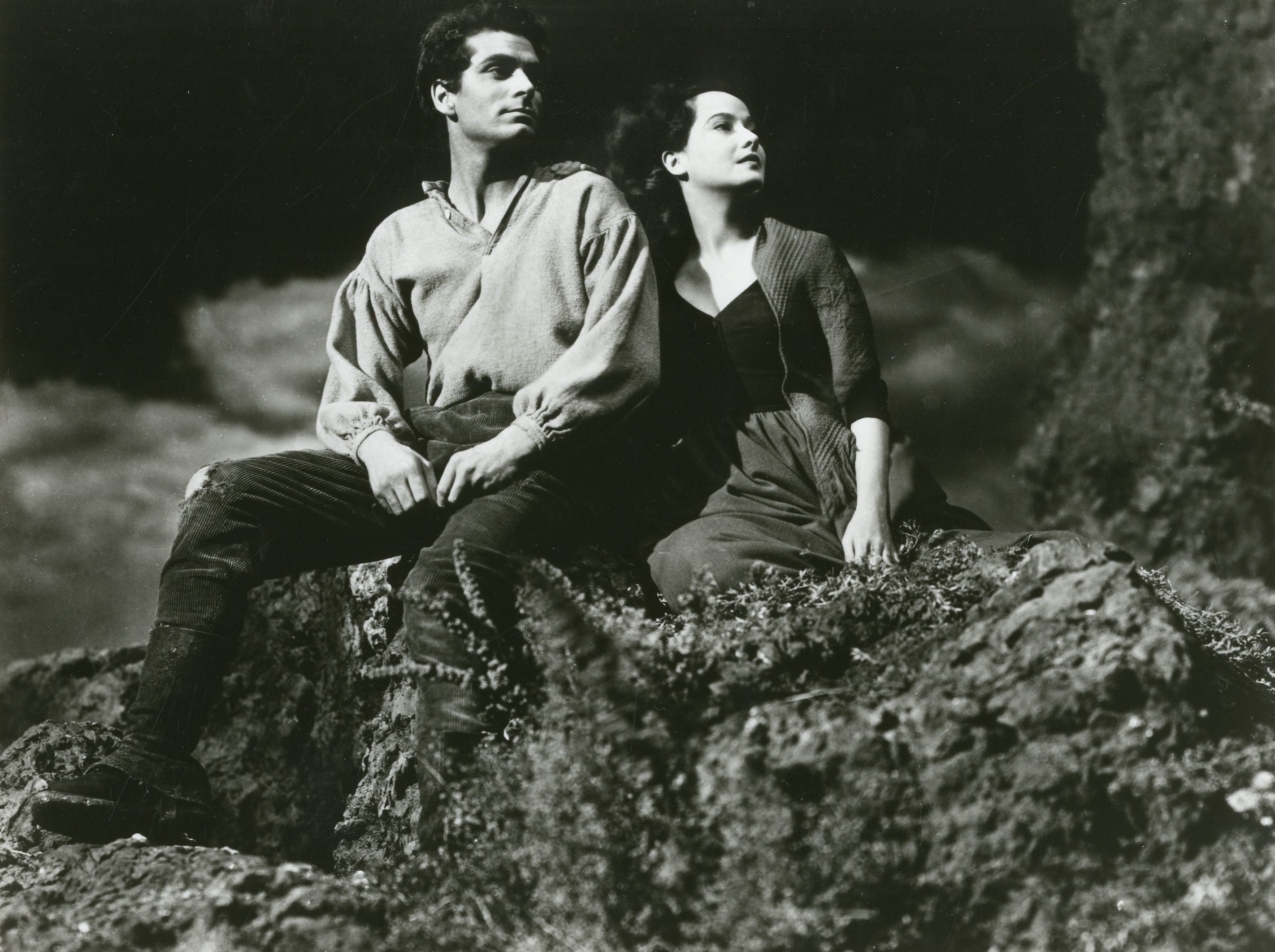
The entire time I’m watching the movie, I can’t help but think: If only Cathy had access to a good therapist to work through that disorganized attachment, she might have saved everyone a lot of heartache. Then again, if she had, we’d probably be missing one of the greatest classical novels ever written. I guess the world would be a terribly boring place if everyone were emotionally stable and securely attached.
The chaos of Cathy’s environment, after all, was the breeding ground for her contradictory and most complex attachment styles.
What is a Disorganized Attachment Style?
A disorganized attachment style, or sometimes called fearful-avoidant, is an insecure attachment style that develops when a child’s parents are both a source of comfort and fear.
Instead of establishing a consistent foundation for creating safety and connection, the child develops a confusing, complex inner world. This happens when a child is born and raised in an unpredictable, unsafe, and chaotic environment, where the primary caretakers are either neglectful or abusive.
As a result, people with disorganized attachment grow up craving deep intimacy while simultaneously paralyzed by the fear of it. As adults, this can manifest as inconsistent behaviour in relationships, moving towards closeness and then pulling away. You can see this in Cathy’s character, portrayed perfectly; she deeply desires to be with Heathcliff but retreats from that intensity once he gets too close. She ultimately chooses the safer option by avoiding and disregarding her feelings entirely and marries the one who does not trigger her childhood wounds.
Fearful-avoidant attachment style can create a lot of distress and confusion in individuals, and may even lead to major mental health conditions like borderline personality disorder. It can be very difficult to be around someone with this attachment style or be in a romantic relationship with them. The constant suspicion, the unpredictability, and the emotional highs and lows can create a toxic, unbearable, and unhealthy dynamic. They not only have a hard time keeping romantic partners around but also have complicated relationships with friends and family.
A disorganized attachment style not only negatively impacts an individual’s relationships, but it also affects other areas of their life — including their finances, career, and physical health. I also wholeheartedly believe that it can shape their relationship with God if they believe in one. They often project their insecurities onto God.
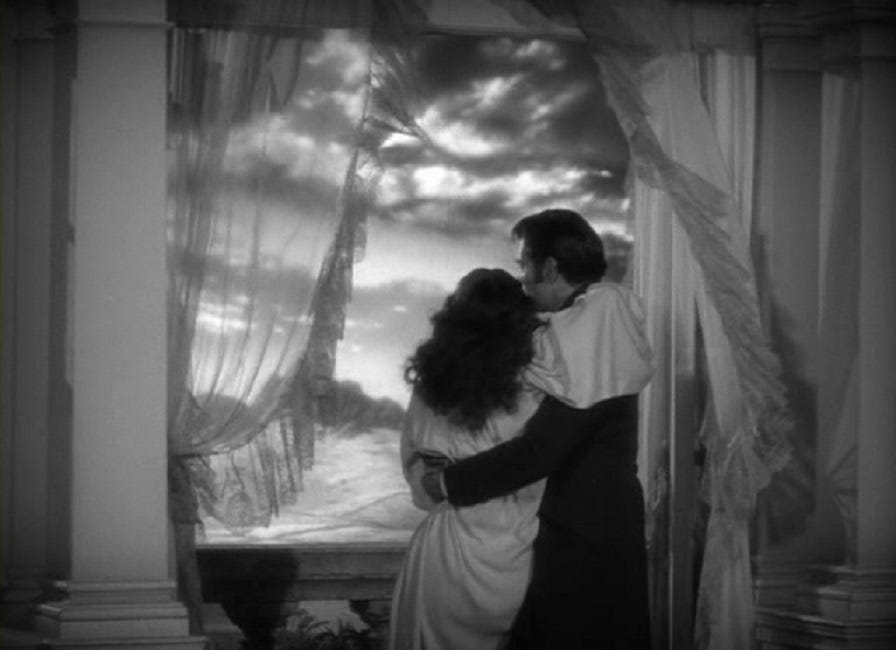
The good news is that disorganized attachment isn’t a life sentence. With self-awareness, therapy, and healthy relationships, people can gradually build more secure connections and lasting emotional stability.
For those who believe in higher powers — in a loving God, healing is guaranteed. For people with this attachment style, God can be a particularly strong source of security. Jesus promises in Scripture that He will never leave nor forsake us (Hebrews 13:5). This is vital, and potentially life-changing, for fearful-avoidant individuals to believe and meditate on until their brains gradually rewire and internalize it as truth.
The truth is that God not only can heal but also desires to bring complete restoration to every part of a person’s life. Whether the wound is emotional, physical, or financial, nothing is beyond His power to mend. He created you and knows intimately what you have endured; therefore, He alone fully understands what you need to live a whole and flourishing life. You are His creation, fearfully and wonderfully made in His image. Apart from His transforming presence, healing remains partial and restoration incomplete.
Perhaps that is what Cathy was searching for her entire life—a complete restoration and healing through love that never fails, one that is secure, steady, and powerful, but grounded in joy and peace rather than fear and uncertainty.
But her unhealed wounds ultimately consumed her, and her broken heart lingered long after her death, haunting the man she could neither fully choose nor fully release.
Wuthering Heights is not just a story of obsessive love; it is a portrait of the human heart in its broken condition. It reminds us that our deepest longings for affection and admiration are, at the core, a yearning for the original design — a world without sin.
May we all one day experience it.
 Fariza
Leave a comment