
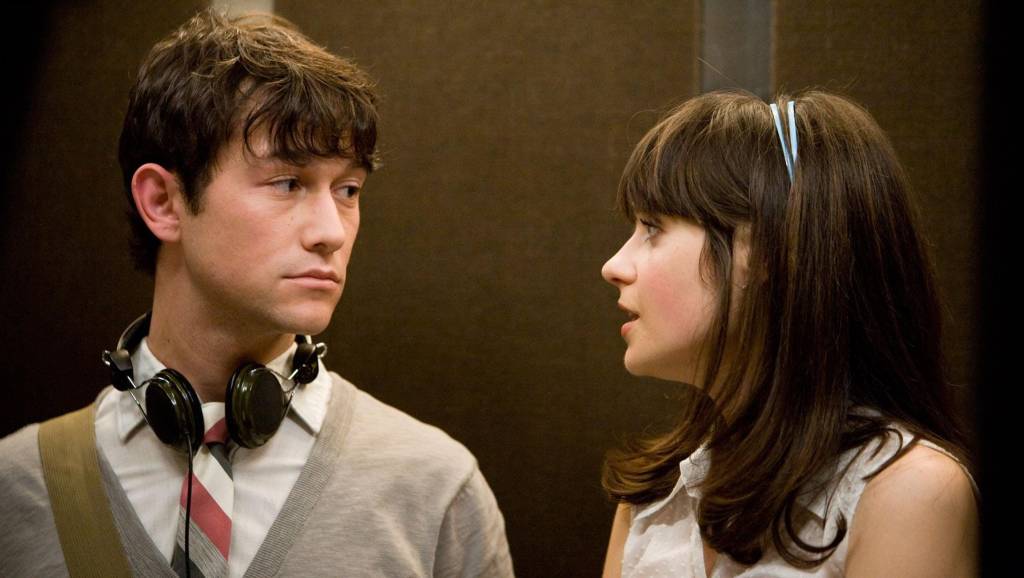
(500) Days of Summer, 2009
I wouldn’t be surprised if St. Valentine is flipping in his grave every time he hears the word “situationship.” Can you imagine? The man who secretly married couples during Roman persecution, who literally became a martyr for love, hearing about our modern dating nonsense? If he were alive today, he would probably get martyred all over again for the same cause, just a slightly different reason.
The headlines would read something like this:
“You Won’t Believe Who Killed Valentinus of Terni…A Situatinship.”
Jokes aside, for those of you who don’t know what a situationship is, you are truly lucky. I’m going to assume three things: 1) You are a boomer, likely married (happily or not). 2) You are currently in one and in denial. 3) You are just a decent human being with actual good moral character.
If you are in category three: Congratulations! Stay there. Read this post, because I want to prevent you from ending up in one.
For the rest of us who have been stupid enough to get into one of these useless relationships, let me elaborate further.

What is a Situantionship?
According to Google, a situationship is an undefined, non-committed romantic or sexual relationship (although not always) that exists in the gray area between “just friends” and a committed partnership. Basically, two broken people decide to casually hang out, have fun, occasionally Netflix and chill (if you know what I mean), and enjoy all the benefits of a committed relationship without actually committing. They get the fun and the intimacy of a real connection while keeping their options open in case something more exciting comes along.
It’s basically the “I get to have my cake and eat it too.” Sort of…
So, where did situationships come from?
I believe they are the byproduct of the developed world. In the East, the reality is different, but no less dire. Over there, people don’t do situantionships. Instead, they get married at 18, are legally allowed to have up to four wives, and somehow still manage to have multiple girlfriends spread across different zip codes.
In the West, we are too busy hustling.
We’re too busy to do our own laundry, so we pay our local laundromat to do it for us. We’re too busy to shop or cook, so we Instacart and HelloFresh our nutrition. And when it comes to relationships, we do the same thing. We have one-night stands through Tinder, Hinge, and Grindr. We invent a hook-up culture, we professionalize prostitution through OnlyFans, and add a new word into our vocabulary — a situationship (Noun: Someone who has no self-respect).
We have normalized dysfunction and wonder why our world is slowly going to hell. We have become incredibly creative in monetizing our mystery. We tell ourselves we are being efficient — practical, quick, detached, not realizing we have been paying the cost this entire time. You might not see it right away, but over time, this “efficiency” will affect and shape an entire future generation.
Anything built on short-term satisfaction will carry long-term consequences. Think, for instance, of eating donuts for breakfast every day. Donuts taste devoon in the morning, but before you know it, you will be on your way to your primary care doctor’s office to pick up a GLP-1 medication to manage your blood sugar levels.
Remember, every short-term decision you make each day will have a long-lasting impact on the trajectory of your entire life. This is exactly why so many people in our society suffer from depression, anxiety, dissatisfaction, and both physical and emotional distress. And our entire nervous system is out of whack all the time.
It is truly sad that we have more somatic coaches and therapists in this country than electricians. There is obviously a need and demand for both, but the imbalance is truly astonishing.
We create problems and wonder why we suffer.
People get into situationships for what seems like shallow, trivial, external reasons, but in reality, if we look within ourselves, the issue is much more complex and way deeper than we make it out to be.
So, let’s lock in and get into that complexity.

Trauma Bonding and Attachment Styles
All human beings have an innate desire to love and be loved. As a Christian, I believe I was created by a Being described in the Bible as love itself. If He is the definition of love and I am His creation, then I was born out of that love. I am designed for love, and without it, I cannot function properly as a human being.
Romantic love, in particular, is one of the most beautiful feelings God has graciously gifted to humanity. It is also one of the things that makes us extremely vulnerable. The devil knows this very well; therefore, he tries to do everything in his power to distort it as much as he can.
Most people believe that when they enter a romantic relationship, they are fully in charge. But in reality, we all follow patterns determined by our attachment styles. Even if you think you are not dating intentionally and that it’s just casual, you are actually making deliberate decisions based on the validation you received, or lacked, as a child.
No romantic relationship is truly casual. A situationship is a byproduct of your attachment style.
There are four primary attachment styles: anxious, avoidant, disorganized, and secure. If you are a securely attached person and your life speaks for itself, this post is not for you.
Do humanity a favor by spreading the love and being an example to others.
Unfortunately, most people in our society do not have secure attachment style; they are either anxious, avoidant, disorganized, or some combination of all three.
Our messed-up attachment styles don’t just affect us; they determine who we end up dating and eventually marrying. Most often, we attract people with opposite attachment styles — an anxious person might desperately try to make an avoidant commit; an avoidant deeply craves a connection but is morbidly terrified of closeness. We do this because, subconsciously, we are searching for something we lack in ourselves. And that something is what our primary caregivers (mostly our parents) failed to give us as children. If our emotional needs were not met in childhood, we will seek them in our romantic partners in adulthood.
As adults, we subconsciously look for partners to give us the love we never received from the parents who failed us. We hope it will heal the wound, but it never does, no matter how much we want it.
People subconsciously choose partners who resemble the parent with whom they had the most difficult relationship growing up. Essentially, most people end up dating or marrying “their parents,” so to speak. I know it sounds creepy, but it’s true.
When we meet people who are like our parents, it feels familiar. If you grew up in an unstable household, chaos in relationships will feel normal to you. You will crave it because that is the only definition of love that you have. This is why many people end up and stay in abusive relationships. It’s the familiarity.
This is also why divorce rates are higher than 50%, infidelity is through the roof, singleness is an epidemic, and phenomena like situationships exist.
It all begins in the family.
If you do not resolve your internal family dynamic systems, they will eventually dictate and impact your relationships. You will continue repeating the same old pattern and dating the same person over and over again, but in a different body.
This is also why many people end up in situationships. It’s because they would rather receive breadcrumbs from an unavailable person than face their brokenness in singleness and solitude.
At the core, situationships are, in a sense, a form of abuse. No self-respecting human being should give themselves away physically or emotionally without the promise of a long-term commitment.
You are worth so much more than an occasional text, a “Netflix and chill,” a mixed signal, or low or no effort. You are too precious to deal with this kind of crap! I know dating these days is hard and the bar is truly in hell, but please remember that being alone is much better than being with an absolute loser who uses a 3-in-1 body wash, shampoo, and conditioner and ruins your self-worth.
You are so much better than that.

What Love is Not
Please remember that love is not feeling butterflies in your stomach. In fact, it’s a sign that you are around an unsafe person. The butterflies are signaling to you that your nervous system is not at ease. Your body is telling you, “I don’t feel safe around this person.” Feeling butterflies in your stomach is not a sign of love; it’s a sign of anxiety.
Situationships are not love. In reality, they are a destructive, soul-sucking, time-wasting, meaningless form of mind-control. Most people get into these relationships out of fear of abandonment, low self-esteem, past trauma, or pure boredom. Then they end up getting attached, thinking it’s love when in reality their childhood wounds have been triggered.
It’s not love. It is a trauma bond.
For many people, mostly men, situationships are a defense mechanism and an ego boost. Deep down, they want to be loved, seen, and understood, but because they are terrified of being hurt or rejected, or having to put real effort into a relationship and their healing, they refuse to commit.
It’s much easier to numb yourself from jumping from one relationship to another instead of actually facing your inner demons.
The pain of childhood wounds can be so powerful that many would rather numb themselves with non-commital sex, drugs, alcohol, workholism, infidelity, gambling, or any other addiction than sit with the pain and allow God to heal it.

What Does Healthy Love Look Like?
Real love is boring.
It is quiet.
It is stable, safe, and secure.
There are no butterflies, just peace. It doesn’t leave you guessing what the other person thinks or feels because it communicates its needs clearly. It respects the other person’s boundaries. It meets the needs and wants of the person with joy, not anger.
Healthy love is not an emotional rollercoaster. It takes time to develop. It feels like stillness. Your nervous system settles around this person; it doesn’t spike. You feel seen, not scrutinized. There is no sense of urgency, there is no sense of panic. Real love is not the frantic hope of a text or call back. It’s the quiet certainty that they will call and text because real love is consistent. It shows up in simple moments, like grocery runs, the comfortable silences while sitting on the couch, and scrolling through your phone, or watching a movie without interruption.
True love is not scarce. It is abundant, and it requires the courage situationships avoid: the courage to name what you want, and walk away from what doesn’t meet it.
Real love takes accountability, makes things right if mistakes were made, and looks forward to a better future. Real love does not give up easily. Real love fixes issues as they come up and doesn’t sweep things under the rug.
True love is not passive-aggressive. It is honest, vulnerable, and gentle; at its best, it is a reflection of something perfect and steadfast.
As humans, we crave the love that chooses, sacrifices, and stays, the love that holds us in the highest regard.
If you want to continue to learn what real love looks like, read 1 Corinthians 13 in the Bible.
Love is patient, love is kind. It does not envy, it does not boast, it is not proud. It does not dishonor others, it is not self-seeking, it is not easily angered, it keeps no record of wrongs. Love does not delight in evil but rejoices with the truth. It always protects, always trusts, always hopes, always perseveres.
When we settle for short-term relationships, we are essentially seeking that perfect love that we all deeply crave in the wrong vessel. We want so desperately for a wounded person to be our salvation. And the truth is that it always fails. No human being can fix our childhood traumas (unless it’s your therapist, even then, your therapist can’t cure you). No man or woman can replace or fulfill the love your parents failed to give you. Until you choose to heal from within, nothing in your life will change. You will end up going around the same mountain over and over again.
Healing begins when we stop asking broken people to give us what only God can provide.
How To End a Situationship?
If you decide to make a change in your life, here are some tips that will help you move in the right direction.
First of all, name the situation that you are in. Admit it. I know it sucks, but trust me, it will help. Tell yourself, this person is not choosing me, and I am accepting less than I desire. You won’t believe it at first, but keep saying this. Eventually, your brain will program this as the truth. It’s literally science.
Then, ask yourself and actually think about what this relationship actually looks like. Ask yourself (not them), “What are we?” Seriously, think about this. Name your needs and see if this person actually meets them. Do you actually like this person, or are you too afraid to be alone?
Third, and most importantly, does this person choose you? If someone tells you that they don’t want to be in a committed relationship with you, BELIEVE THEM! People say what they mean, especially men. Do not lie to yourself by thinking you might change their mind. Also, as your big sister, I would tell you, please have some self-respect. If someone tells you they don’t want you, why would you challenge that? And if they lie to you to take advantage of you, run as fast as you can from this coward.
If someone is not sure about you, withdraw your emotional support from them. Stop carrying all of that emotional labor on your own. It is not your responsibility to force someone to love you. Stop filling the intimacy gaps of emotionally unavailable people. Pour that energy into yourself instead.
When someone breadcrumbs you, ghosts you, or sends you mixed signals, tolerate the withdrawal. DO NOT BEG FOR THEIR ATTENTION! The emptiness after you leave is not a sign that you made a mistake. It is a sign that you are breaking an addiction pattern. Let it hurt because it is a wound, and it will take time to heal. Be patient.
Lastly, remember St. Valentine did not risk his life for meaningless situational relationships. He believed in the sanctity of love and marriage, and he risked his life for it. I hope that after reading this post, you will start believing it too. I pray and hope that you begin to see your worth not through the eyes of the world but through the eyes of the One who is deeply and madly in love with you.
His name is Jesus ❤
 Fariza
Leave a comment